
Black Stains on the Washer Door Seal: What Comes Off — and What Won't
By Vent Pro NYC · · 4 min read
Here’s the conversation we have in laundry rooms every week. The mold on a washer gasket — the living growth causing the smell — can be removed completely. The black marks it leaves behind often can’t. Anyone who promises you a factory-fresh gasket is selling; here’s what’s actually happening in the rubber.
Mold vs. mold stain
Active mold sits on and just under the surface of the rubber: colonies you can kill and physically clear out. But when mold lives on a gasket for months, its pigment soaks into the rubber itself, the way a tomato sauce stain soaks into a plastic container. The container is perfectly clean after the wash — and still tinted. Gasket rubber is porous in exactly the same way.
What an honest cleaning delivers
When we finish a visit, the mold is gone — that’s the job, and we don’t leave until it’s done. The staining is a separate story, and we tell every customer the same thing before we start: on most jobs the black marks fade a little under our stain remover gel, and deep-set stains can stay visible even though the mold in them is dead and cleared. What you get is a clean, treated, fresh-smelling seal — sometimes with a shadow where the worst of it sat.
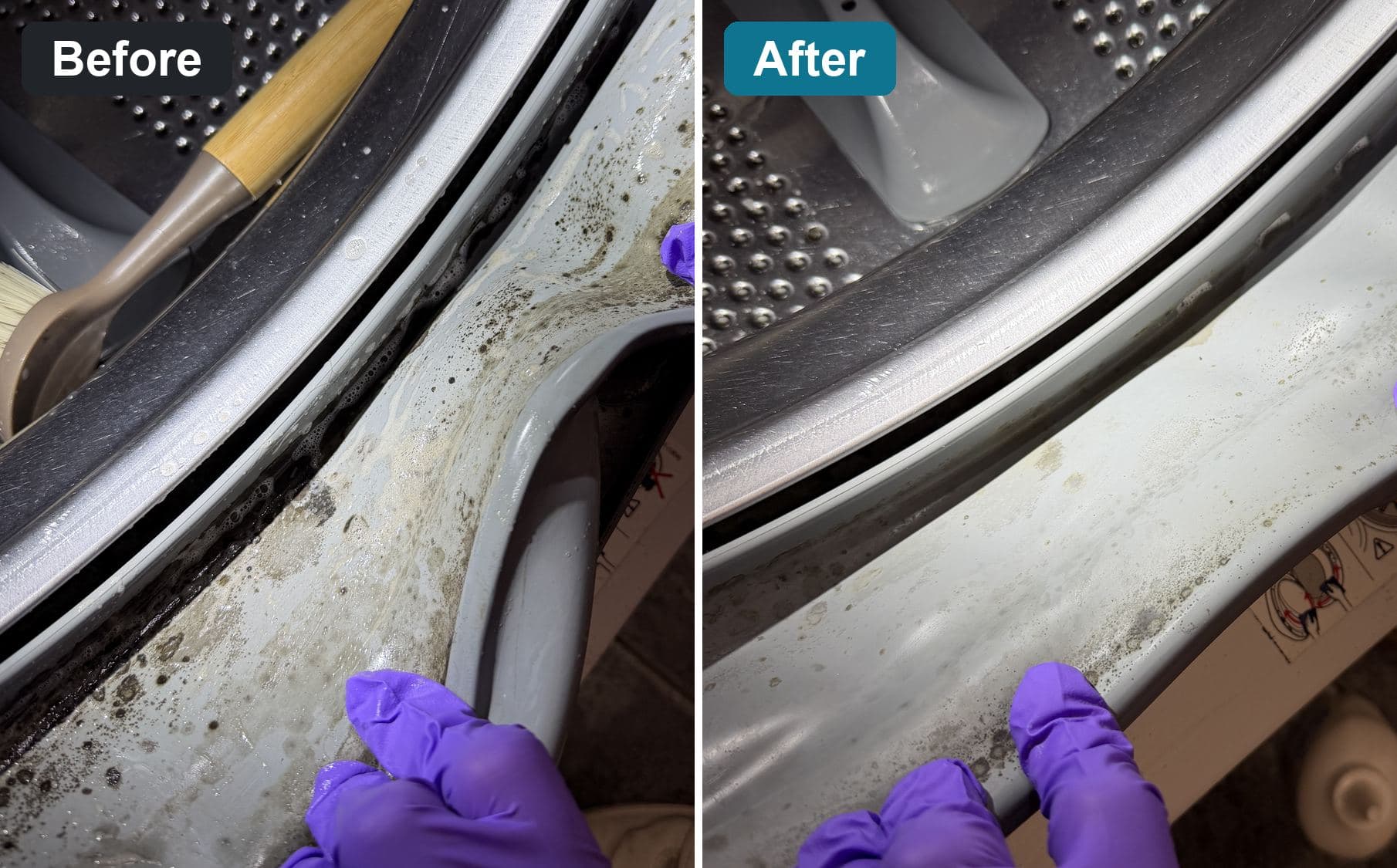
When a new gasket is the honest answer
Two situations. If the rubber is torn, perished, or the door no longer seals, cleaning it is throwing money away — we’ll say so on the spot and refer you to an appliance repair technician we trust instead. And if the gasket is structurally fine but the staining genuinely bothers you, replacement is the only route to jet-black-free rubber; no cleaning product changes that, ours included.
The takeaway
Judge any gasket cleaning — ours, your own, anyone’s — by the smell and the growth, not the shade of the rubber. Mold gone and staying gone is success. A faint shadow on a healthy seal is cosmetic history, not a failed job.