
Can You Use Bleach on a Washer Gasket?
By Eyal Malka, owner of Vent Pro NYC · 12 years in the trade
Published · Reviewed · 5 min read
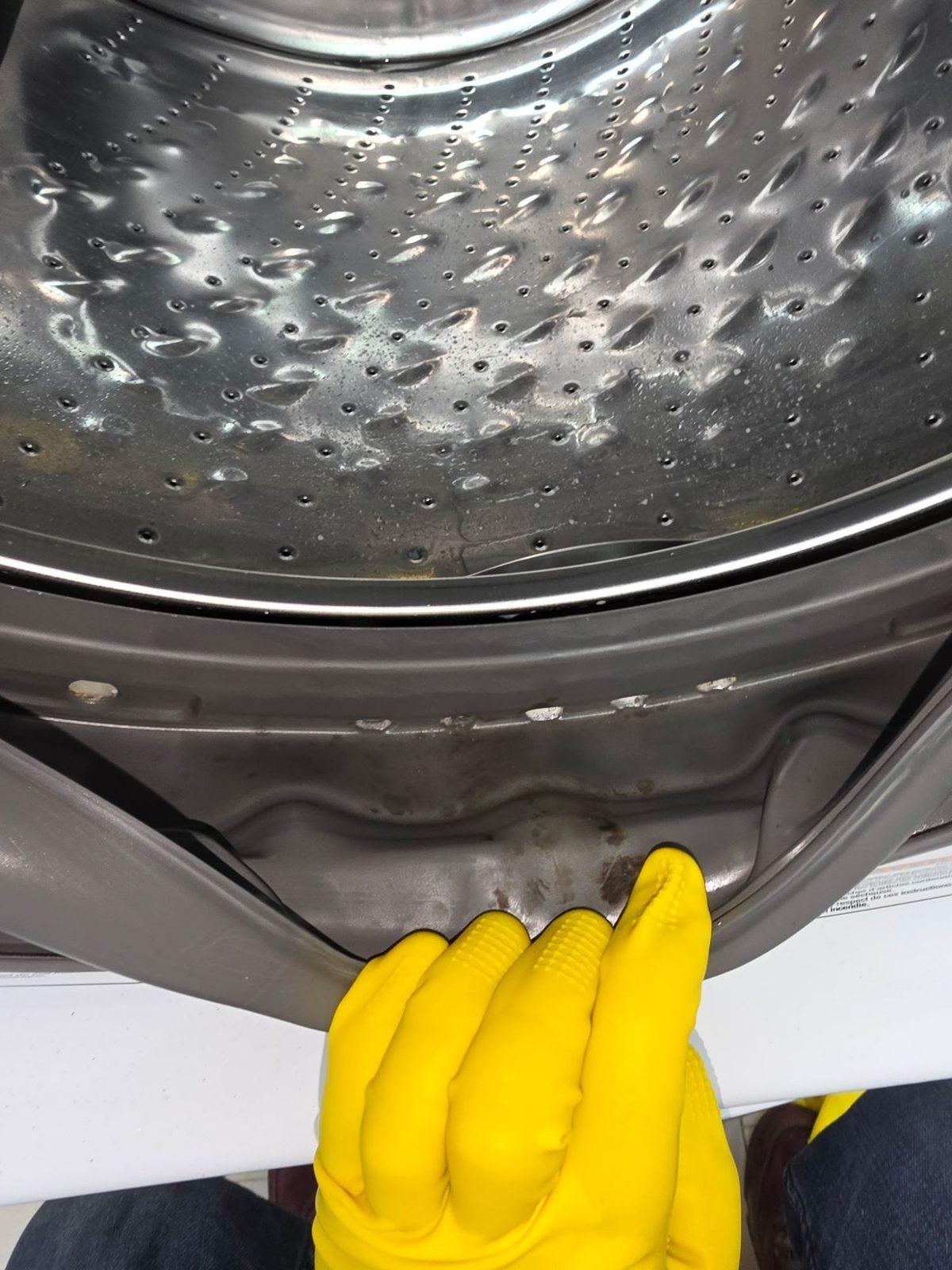
Bleach is the first thing most people reach for when black spots show up on the washer’s rubber door seal, and we understand why: the spots get lighter almost right away. We clean washer gaskets for a living at Vent Pro NYC, the family-owned Brooklyn company behind this site, and a lot of the seals we pull back have already had a few rounds of bleach. The honest answer is that a careful wipe now and then won’t ruin your washer, but bleach is not a fix for gasket mold, and used the wrong way it damages the rubber.
What bleach does to the rubber
Chlorine bleach is an oxidizer. That is what makes it strong, and it is also what makes it hard on rubber. The problem is long contact and strong mixes: repeated soaks, bleach poured straight into the fold, or a bleach-soaked rag left in the channel overnight. Over time that dries the seal out, and we see the same signs on seals that have been through it:
- Stiffness. The lip stops folding back easily and feels more like plastic than rubber.
- Fine cracks, often in the bottom fold first, because that is where bleach pools and sits longest.
- A chalky surface. Dried-out rubber turns dull and rough, and a rough surface holds lint, detergent film and new mold better than a smooth one.
- Eventually, leaks. Once a crack opens through the fold, water finds it.
A cracked gasket can’t be cleaned back to health. It has to be replaced, which typically runs $150–$400 installed by an appliance repair technician. How to tell a damaged seal from a dirty one. To be clear about the scale of it: one wipe won’t ruin a washer. Months of strong mixes and long soaks can.
Why bleach seems to work, and then the mold comes back
Bleach lightens color fast, so a black ring can look gone within minutes. Lighter is not the same as removed. On a gasket, mold sits in the folds, under the lip, in the channel where water collects, and in the pores of older rubber. A wipe reaches the face of the seal. It doesn’t scrub out what is packed under the fold. And some of the black that is left afterward is stain in the rubber itself, which fades at best, whatever you put on it.
Bleach also doesn’t touch the two things that keep feeding the problem. One is the drain pump filter, where lint, hair and standing water sit at the bottom of the machine. The other is the damp itself: a wet seal and a closed door between loads. Change neither, and the mold comes back, usually to the same spot.
If you use bleach anyway
Check your washer’s manual first, because the advice differs by brand and model. If it allows bleach, use it in the way that is easiest on the rubber:
- Dilute it. Follow the directions on the bottle and in the manual. Never pour it straight into the fold.
- Wipe, don’t soak. Work it over the folds with a cloth, and never leave a wet rag sitting in the channel.
- Rinse with plain water. Go over everything the bleach touched with a clean damp cloth.
- Dry the rubber, under the fold too, and leave the door open.
- Ventilate and wear gloves. Open a window or run a fan, especially in a laundry closet.
- Stop if the rubber feels sticky, stiff or chalky. That is the seal telling you it has had enough.
For a light case, soap and a soft brush are gentler and usually enough. Our DIY guide walks through it step by step.
When to call a pro
- The spots are inside the folds or under the lip, where a wipe doesn’t reach.
- The smell came back after bleach, vinegar or a self-clean cycle.
- You have already tried bleach more than once.
- The rubber is starting to feel stiff but hasn’t cracked. That is the moment to stop the bleach and get the seal cleaned properly, while it can still be cleaned.
A seal that is already torn, cracked through or leaking is a job for an appliance repair technician, not for us, and we will tell you so rather than charge for a cleaning that won’t hold. And if a smell is the main problem, the seal is only one possible source: the detergent drawer and the sewer line the washer drains into can smell too.
What we do instead
Our visit is $179.99 flat. We work three solutions we mix in-house, made to pull mold out of rubber without cracking or drying it, into every fold of the seal, drying it down between coats. The last of the three is a finishing treatment that makes the rubber a harder place for mold to come back to. A stain remover gel goes over any staining that’s left, and the drain filter is cleaned in the same visit. The mold comes off. Deep stains may fade rather than disappear, and we say so before we start. Afterward, the 20-second habit keeps it from starting over.