
Mold in the Washer Detergent Drawer, or the Door Seal?
By Eyal Malka, owner of Vent Pro NYC · 12 years in the trade
Published · Reviewed · 5 min read
Most people who search for a musty washer end up staring at the rubber door seal, and often that is the right place. But a front-loader has a second damp spot right at eye level that gets far less attention: the detergent drawer, and the housing it slides into. If you have cleaned the seal and the washer still smells, or you pulled the drawer out and found something dark inside, this is for you.
Why the drawer grows mold
Every wash, water flushes detergent and softener out of the drawer and into the drum. Some of that water stays behind, along with a film of whatever didn’t rinse out. The drawer sits closed in a dark housing, so it never really dries. Thick or overdosed detergent and fabric softener make it worse, because they leave more residue to hold onto.
How to check the drawer
- Pull the drawer all the way out. Most have a release tab or button; your manual shows where.
- Look at the drawer itself: the corners, under any softener insert, and the underside. Gunky residue or black spotting is what you are looking for.
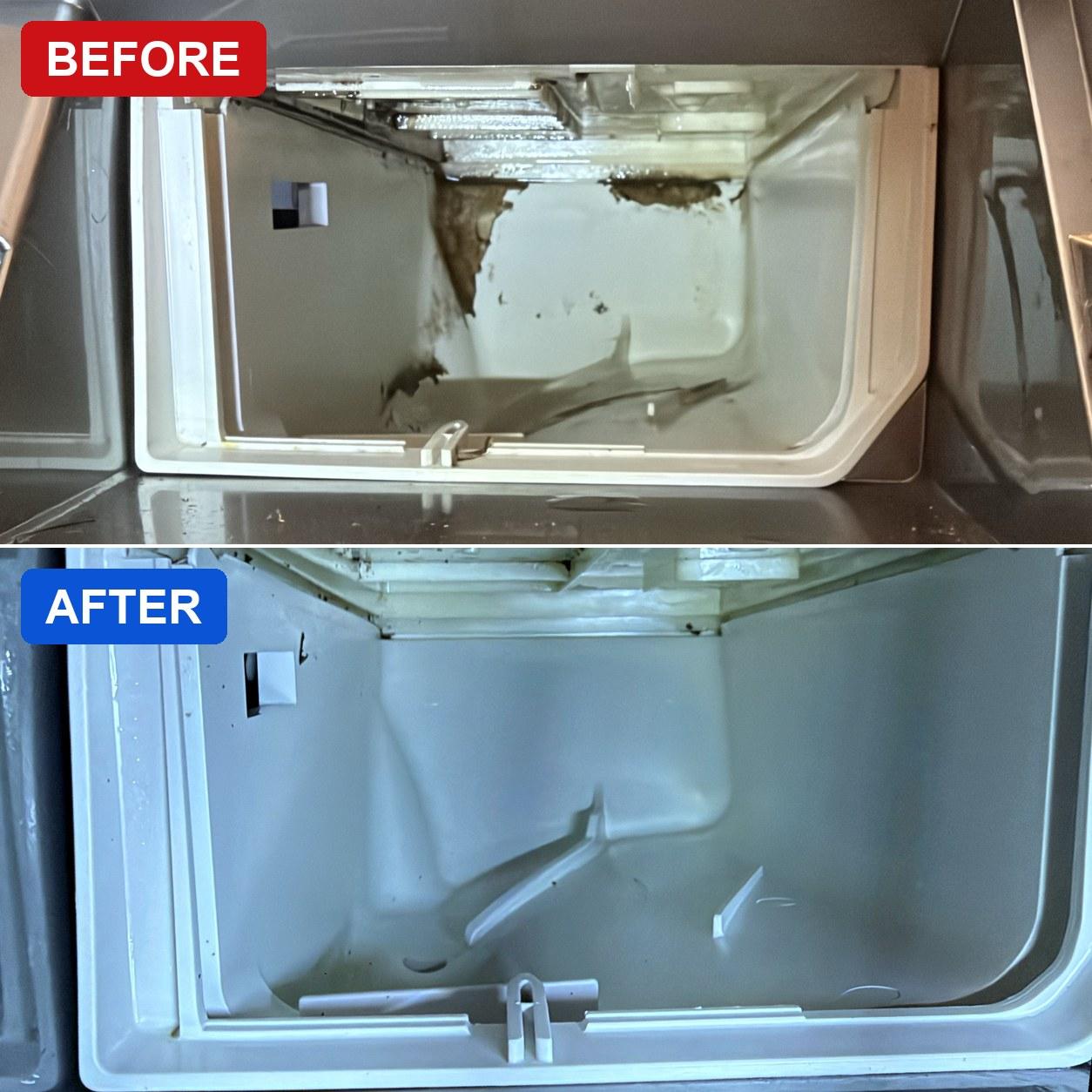
- Shine a phone light into the empty housing. Look at the back wall, the floor, and up under the top, where the water comes in. This is the part most people never see.
- Smell the empty housing up close, then smell the folded-back door seal. Whichever is stronger is your main suspect.
How to check the door seal
Open the washer door and fold the rubber lip back toward you, all the way around, starting at the bottom where water collects. A dark ring, grey slime, or standing water in the channel is mold in the washer door gasket. Why that fold molds in the first place is in why front-load washers smell musty.
Cleaning the drawer yourself
The drawer is the easy part: once it is out, it can go in the sink with warm soapy water and an old toothbrush for the corners. Let it dry before you slide it back. The housing is harder, because you are reaching into a dark slot inside the machine, and the buildup tends to sit where you can’t see it without a light. Going forward, measure HE detergent, go easy on softener, and leave the drawer pulled open a little between loads so it can dry, the same way leaving the door ajar helps the seal.
What we clean
Our washer gasket mold removal in Brooklyn is $179.99 flat: our four-step treatment on every fold of the front-load washer seal, with the drain filter cleaned in the same visit. The detergent drawer deep clean is a $29.99 add-on, and it covers the drawer and inside the housing it slides into. If you skip the drawer, we still do the full gasket cleaning, but if the smell is coming from the drawer, another part of the washer, or the sewer line it drains into, some odor may remain.
We treat mold and staining. When the drawer or the seal is where the smell is coming from, it often eases once they are clean, but we don’t promise any smell is gone for good: the sewer line the washer drains into can smell too, and that is a plumber’s job. And on the rubber, the mold comes out, the black staining usually only fades. If the seal itself is torn rather than dirty, that is a replacement question for an appliance repair technician.