
Why Your Washer Still Smells After Running Self Clean
By Eyal Malka, owner of Vent Pro NYC · 12 years in the trade
Published · Reviewed · 5 min read
You did the right thing. You found the Self Clean button (some brands call it Tub Clean or Clean Washer), maybe dropped in a cleaner tablet, and let it run. The drum came out shiny. Then you opened the door the next day and the musty smell was still there. That happens a lot, and it doesn’t mean the cycle is broken. It means the smell is living somewhere the cycle doesn’t reach.
What a self-clean cycle actually cleans
A self-clean cycle fills the drum with hot water, tumbles it, and drains it. That flushes the drum and the path the water takes out of the machine, and it is worth running. But a front-load washer seal is a set of deep rubber folds, and the cycle’s water mostly runs past them. Whatever is already growing under the lip is still there when the cycle ends. On a front-loader, there are three places to check.
1. Under the rubber door seal
This is the most common source. Open the door and fold the rubber lip back toward you, all the way around, starting at the bottom where water collects. Black spotting, grey slime, trapped hair and lint, or a little standing water in the channel means you have found it. Then smell the washer door gasket itself, up close. If that is where the smell is strongest, you have your answer.
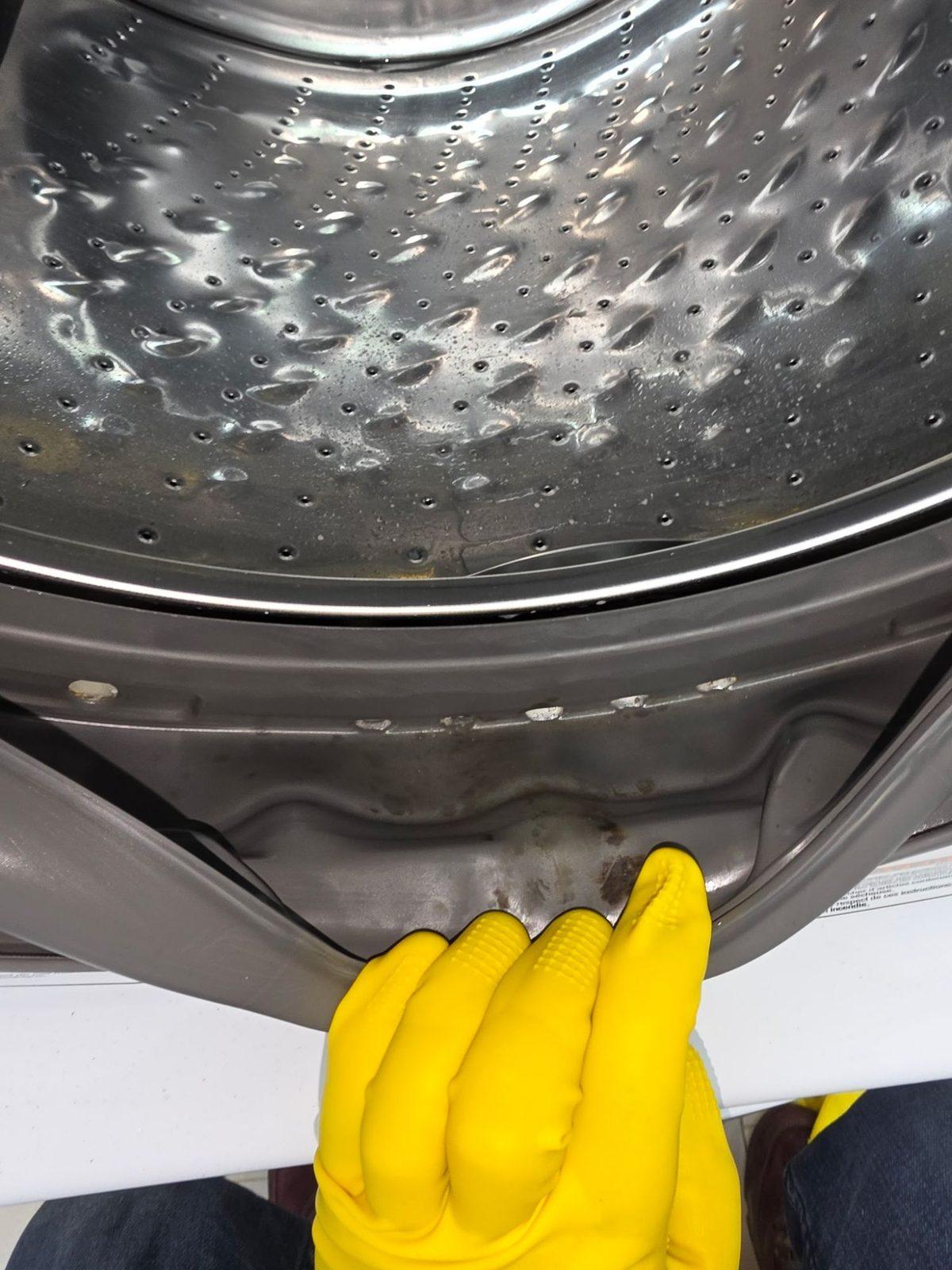
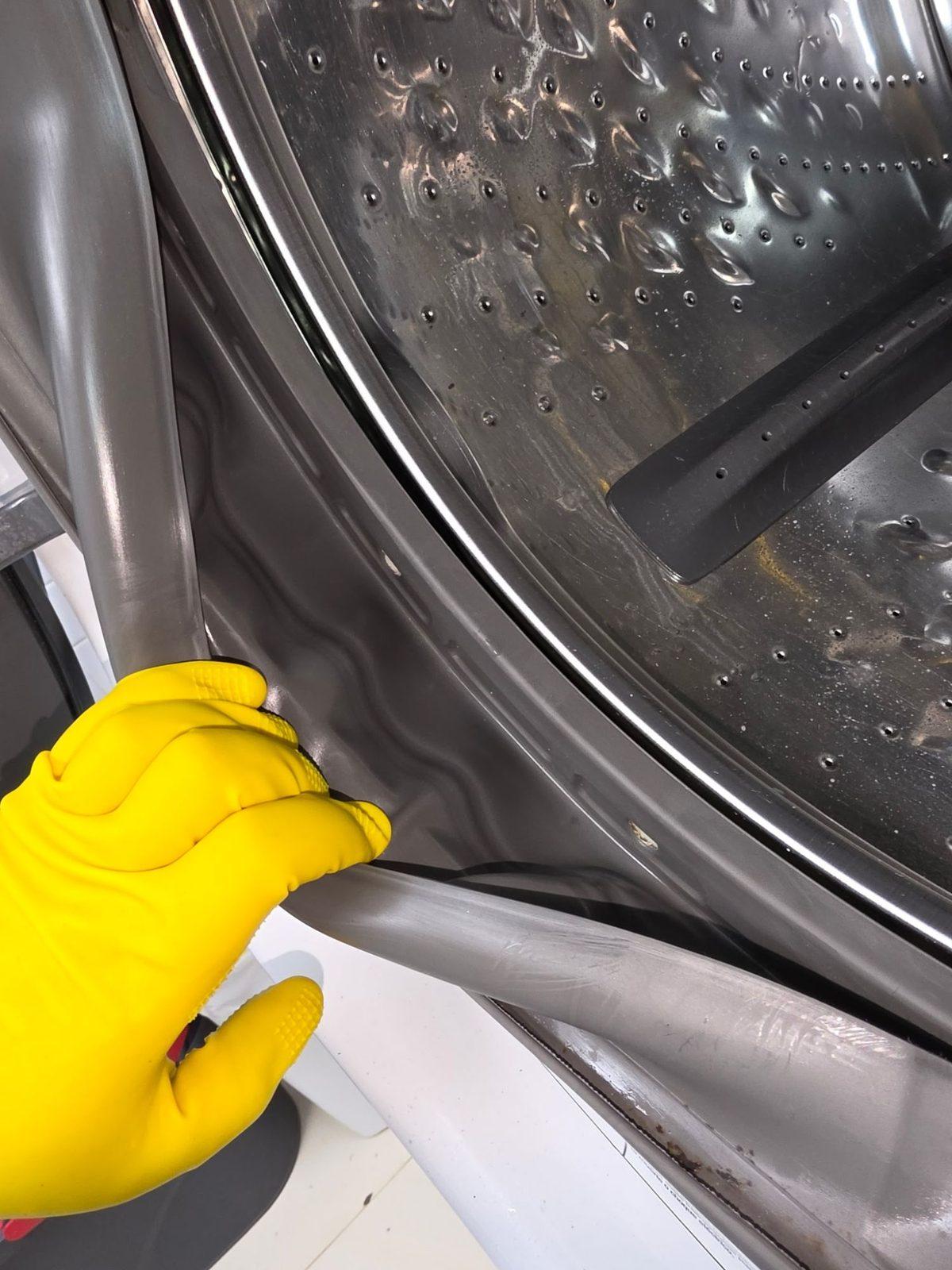
Why the folds hold onto mold in the first place is in why front-load washers smell musty.
2. The detergent drawer and its housing
Pull the detergent drawer all the way out. Most have a release tab, and your manual shows where. Look at the drawer itself, then shine a light into the housing it slides into. Water sits in there after every wash, along with detergent and softener residue, and that can grow mildew and smell musty too. A self-clean cycle doesn’t clean it. The drawer itself can go in the sink; the housing is the hard part to reach. How to check the drawer and its housing.
3. The drain pump filter
Behind a small panel at the bottom front of most front-loaders is a filter that sits in standing water and catches lint, hair, and coins. Many owners have never opened it. The cycle drains through it, but it doesn’t empty it out. How to find and clean it.
What to do about it
If the rubber door seal is only lightly spotted, you can clean it yourself with the method in our DIY guide. If the mold is established, deep in the folds, or keeps coming back, that is the job we do. Our washer gasket mold removal in Brooklyn is $179.99 flat: our four-step treatment on every fold of the seal, with the drain filter cleaned in the same visit. The detergent drawer and its housing are a $29.99 add-on. If you skip the drawer, we still do the full gasket cleaning, but if the smell is coming from the drawer, another part of the washer, or the sewer line it drains into, some odor may remain.
An honest word on the smell. We treat mold and staining on the rubber. When the seal is where the smell is coming from, it often eases once the mold is gone, but we don’t promise any smell is gone for good, because a washer has more than one damp place, and the sewer line it drains into can smell too. The black marks are a separate story too: the mold comes out, the staining usually only fades.
Keep running the cycle
None of this means Self Clean is useless. It keeps the drum and the drain path fresh, and our own aftercare ends with a cleaning tablet run through that same cycle. It just works best on a seal that is already clean. The day-to-day habits that keep it that way are in the 20-second habit, and the schedule is in how often to clean a washer gasket.